Showing posts with label books. Show all posts

Sunday, August 7, 2011

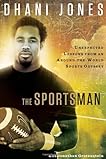
The Sportsman: Unexpected Lessons from Around the World by Dhani Jones

I am not a football fan by any stretch of the imagination.  I was introduced to American football player Dhani Jones through an article in the August 2011 edition of Muscle & Fitness magazine (which also featured an excellent article on actor Terry Crews).  I've been borrowing and reading Muscle & Fitness recently as an alternative to women's fitness magazines which spend way too much time, in my opinion, talking about hair and makeup tips.  The workouts in those magazines are light and are usually about firming up with 5 pound weights and losing weight "by eating these 5 foods".  Since I have very little hair, wear no makeup, and enjoy lifting heavy weights, I really have no interest in them.  There are some magazines akin to Muscle & Fitness for women but my library doesn't subscribe to them.  Anyway, back to Dhani Jones.  

Dhani Jones is a linebacker for the Cincinnati Bengals.  He also had his own show, Dhani Tackles the Globe, which is available as a "play now" on Netflix and wrote a book The Sportsman: Unexpected Lessons from around the World which is part memoir, part chronicle of his time taping the show.  

I enjoyed reading The Sportsman.  I guess because I have finally started to consider myself to be an athlete, I just identified with a lot of what he had to say.  I also liked the conversational style of the book: I felt like Jones was honest and open and that after having read it, I really had a good sense of who he is.  And I really like him.  He can be cocky and then humble.  Quirky and then very regular.  I liked how he was really conscious of everything he was doing--the effects it would have on his body, his mind, his spirit but also on how folks would see others like him, namely Black folks.  He speaks more than once about busting myths about Black folks like how Black folks don't travel or swim.  So he understood that when he went to places where there were no Black folks, that he had a lot riding on his shoulder as "the representative" but he doesn't bristle at being that--he embraces it which is not always easy to do.  

It was just really interesting reading about all the adventures he had and all the things he got to do.  All while balancing a demanding football career.  Sounded like a whole lot of fun and a whole lot of challenge.  It was a nice read.  Pretty easy.  In fact, I started to get a tad bored at the end and then I learned that the show wasn't renewed for a third season.  I could see why . . . you can only do it so many times before it's completely done.  I'm not sure if I'll finish watching the show on Netflix now that I've read the book because I already know what's going to happen but I might . . . it might be good to see the pictures that go along with the words.  Anyway, I recommend both the show and the book.  Very enjoyable.  

Sunday, July 24, 2011

Book Review: The Girl Who Fell from the Sky by Heidi W. Durrow

I was really not impressed by this book (but very happy to have at least added another book to my 2011 Reading List).  The Girl Who Fell from the Sky was like something I could have read in middle school.  The characters seriously lacked depth and the plot, which was really boring and uncomplicated, didn't make up for it. I guessed at the resolution to the main "suspense" early in the book.   It just left me wanting . . . 50 pages left to the  novel and I couldn't wait to get through it in hopes that something, anything would happen.  And it never did.  Also, I found the style of writing to be choppy and all over the place although I can respect that author's attempt at artistry in her writing.  

I wanted to like this book.  It promised to explore issues of race from the perspective of a biracial girl.  I was hoping for a wonderful peek into how a biracial girl, living in an urban (read: predominantly lower-income Black neighborhood) would negotiate her way in this setting.  The main character, Rachel, seems to deal with issues that would not be exclusive to her as a biracial girl.  The teasing is something that anyone who is different (i.e., who doesn't fall into the "normal" category for a particular culture which in this case is low-income, inner-city, Black culture) can expect.  Things like being ridiculed for not being "black" enough or trying to "act white" or being accused of thinking oneself better or smarter or just different.  And the character of Rachel doesn't handle herself in any way that would stand out.  In fact, the main issue Rachel seems to be dealing with is the psychotic behavior of her desperate mom and the repercussions of bad decisions.  And this is heavy stuff but Durrow keeps it at the cotton candy, fluffy sweet level and we never get to delve deeply into theses issues (and, as I was hoping, how they are complicated by the fact that Rachel is half-Black and half-White).  Some real potential there, I thought.  

The book really just fell flat, unfortunately.  Sorry, I can't recommend this one.  

Monday, May 30, 2011

Book Review: Dreaming in Chinese by Deborah Fallows

I found Dreaming in Chinese: Mandarin Lessons in Life and Love by Deborah Fallows to be quite an interesting read. Fallows is a linguist who derived some wonderful lessons during the process of learning Chinese.  Now, these lessons are not overly deep or profound. I guess I wouldn't really call them lessons but rather observations.  Nonetheless, the book was an easy and enjoyable read and it served as a great opportunity to learn a little bit about the Chinese language and culture. I found Fallows' writing to be very fluid and comfortable.  It was quite accessible and very funny at times.  Every time I sat down to read it, I was able to read through one chapter--they were short and to-the-point. That helped me to get through the book and really engage with it.  

As for the Chinese language, let's just say that it's a language I hope I never have to learn. Fallows really helped me appreciate how complex it is but I also found it to be very beautiful. She talks about a poem called Lion Eating Poet in the Stone Den that uses the same word to tell a whole story. The only difference is tones. She points out how difficult it is for Westerners to even hear the tones and I've found that to be true.  Igbo is also a very tonal language and it's funny sometimes when I say a word and the hubby repeats it and I say it's not the same word and he gives me a confused look.  But I don't think Igbo is anywhere near as tonal as Chinese so I think it would be challenging for anyone to learn.

Linguistics is a fascinating field and I'm always intrigued by how much language is a window into the life and culture of a people.

A short, interesting interview with the author.

Wednesday, May 18, 2011

Book Review: The Middle Place by Kelly Corrigan

I wasn't sure if I should read The Middle Place by Kelly Corrigan after just finishing The Road.  I thought it might be too much sorrow and suffering but surprisingly, it was the perfect book.  I mean, I really enjoyed reading it.  It was uplifting and so full of . . . love.  My spirit felt buoyed after reading it.

Ms. Corrigan was diagnosed with breast cancer and this book chronicles her journey.  But honestly, the cancer was a backdrop to the wonderful story of her life:  a life where family (both the family you're born into or create and the one you build made up of friends) is pivotal and is, at the end of the day, all that really matters.

I don't have much to say about The Middle Place except that it was such an enjoyable read.  I thought at times that Ms. Corrigan didn't take the cancer seriously enough but I know that's not true having read her other book Lift.  I thought, in a weird, twisted way, that she was fortunate that her father (and you can feel the love and devotion she has for him) had cancer while she had cancer because it forced her to not be hyper-focused on her own suffering.  I think that made all the difference in the energy that permeates her story.

I mean, the book touched me.  I think Ms. Corrigan is an engaging person--someone I'd like to be friends with.  She's had an interesting life and so much of how she approached the whole thing is how I would have approached it.  She's not particularly faith-filled (though she was raised by two people with unshakeable faith in God like me) and yet, she made it through something as harrowing as cancer.  Also, in that time before she knew it was cancer, she had the horrible thought that maybe she wanted to have cancer just to see how she'd perform.  Now, my life has had some bumps and bruised but I've never been tested to that extent.  It's kind of a sick admission . . . I was relieved to see that that I'm not the only one who has ever thought those kind of thoughts.  And then there's the children issue:  how she knew all her life that she wanted to have lots and lots of children and how she was faced with the possibility that it might not happen.   And how irritating it can be when people say, "You should just be grateful for your two" because it's not that you're not grateful for what you have.  It's not that at all.  It's that you're so grateful for the experience of meeting these wonderful small people--flesh of your flesh, blood of your blood--you want to meet as many of them as you can.  

So, yes, I identified strongly with Ms. Corrigan and I'm so happy to have read her book at this point in my life.  I've had it for a while (picked it up at the thrift store some time ago).  It was nice to read a book without feeling the pressure of a due date.  And I need all the low-pressure uplift I can get.

Sunday, May 8, 2011

Book Review: Battle Hymn of the Tiger Mother by Amy Chua

I wasn't sure when I'd get this book from the library. I was probably number 386 on a list of 400 library patrons who'd put this book on hold.  Battle Hymn of the Tiger Mother is the much talked about memoir by Amy Chua in which she chronicles how she raised her daughters according to the "Chinese model" which is the opposite of the deeply flawed Western model.  

I think the most interesting thing about this book is that Chua was born and raised in the U.S.A.  From the outset that means that she doesn't have firsthand knowledge of what the Chinese model is.  Nor does she have intimate experience with what it yields or where it comes from.  She does have some evidence, at least, in the person of her father and her youngest daughter that the Chinese model which she holds as the pinnacle of good parenting, didn't and doesn't always work.  Yet, she nobly forges ahead to demonstrate how Chinese parenting is superior to Western parenting.

Chua is careful to note that Chinese parenting is really just the type of parenting that is extremely hands on and controlling--authoritarian.  Children do what their parents say and that's the end of that.  Parents set the goal and children achieve them.  There's no negotiation.  No choice.  And, apparently, no fun.  Chua, it seems, systematically thwarts her children's chances at having a fun childhood inserting piano and violin practices during vacation and long into the night.  For her, fun seems to be a luxury her children can't afford and don't deserve.  

It was almost painful to read some parts of this book.  I think the most heart-breaking scene for me is when Chua is chiding her elder daughter Sophia about some rice that the dogs got a hold of and scattered all over.  Sophia, who usually quietly and calmly puts up with her mother's controlling and over-driven personality blows up (finally) and tells her mother not to take her anger over her little sister Lulu's rebellion on her.  Why?  Because being 13 is tough.  Sophia says she knows this firsthand.  Chua has no clue whatsoever that her daughter found being 13 tough and at this point, the girl is 16.  I mean . . . it really struck a serious chord with me and sent a pang of pain through my body.  So focused on the goal, the dream, the vision that you ignore the persons who are sacrificing to make your vision reality.  I know about that.

At the same time, I get it.  The stereotypical Western parent is lax and does let their kids do whatever they want to do and quit when they get ready.  They don't push their children enough and they let their children run the show.  But I think that the pendulum shouldn't swing too far in either direction:  it shouldn't be control and manipulation and threats to get the desired behavior.  Just as it shouldn't be giving in all the time and having no defined limits for kids to get the desired behavior.  Each of these scenarios sends children mixed messages about if they are loved because the love that's bestowed is conditional upon the behavior.  And as Chua showed in her book, the Chinese model doesn't always work although, depending on personality, it can (potentially--Chua's daughters are not yet grown at the time the book was published).

I will say I admire Chua's gangster though.  I can't think of anything I want my kids to do so badly that I would drive 2 hours to and fro every Sunday to practice or sit for 5-6 hours at a time to do. I mean, I have to give her her props.  She studied the music right along with her children and really put in a lot of effort and energy, physically and emotionally to force her kids to play the piano and violin not just well but excellently.  And I believe in excellence but I'm not sure if I'm willing to pay the price, namely a tense and cold family life where everyone is on eggshells.  Chua was.  It's all about priorities.

So the big question is did Chua raise daughters the way she did for their sake or for herself?  For a long time in the book, Chua had me convinced it was for the good of the girls but as the story progressed, I had to change my tune.  She kept manipulating and controlling even after she saw it was just no good for her second daughter.  Their success at piano and violin she felt was a direct reflection on how good of a mother she was.  Nowhere in there did she seem all that concerned about her daughters' well being.  Forget happiness for a moment.  What about health?  

Chua chalks it all up to being true to the Chinese model.  But the Chinese model exists because it is a different society.  A society where very few can make it--only the very best.  The only way parents can give their children a leg up in life is if they make them to be at the top no matter what.  A look at immigrant parents reveals that they were in a very risky and precarious situation where it was sink or swim.  So they had to work doggedly to make it.  Nobody was giving them a hand up.  The odds were stacked against them.  They simply translated that mind state and work ethic to raising their children.  It was necessary for survival and making it in a new land.  Chua has already made it here and admits to it. Her life is quite solidly middle class so it's not a survival issue here.  Had her daughters never been concert pianists or violinists, they still would have had an excellent chance of leading successful lives.  Plain and simple, it's an ego issue for Chua.  An ego trip (I have to point this out) that would not have even been possibly if Chua was not solidly upper middle class.  She was tossing out numbers for gowns and teachers and talking about family vacation and such . . . these are things that Chinese parents/newly immigrated parents would not be able to do.  They simply would hope that they would set it up so that if their grandchildren would like to, they could.  (But I understand Chua not wanting the grandchildren to jack up the upward progression with mediocrity and a lackadaisical attitude.) 

I get that children will want to give up when something gets challenging.  But, especially in raising Z1, I know that if I show a bit of disappointment when he is ready to give up, he will suck it up and try.  That is how important it is to him to please me.  And at 5 years old, it's very easy for me to manipulate this deep desire to get him to do things.  I mean, the things I want him to do I believe are for his own good but I don't know, I want to bring my children to do things not to please authority but for that things merit.  I think about trying to teach Z1 to count  money and how I kept hitting a wall.  A few months later, he got really interested because he wanted to start buying things.  Teaching money became really simple and he's really gotten the concept.  I know this probably won't apply to everything but I think it probably applies to the majority of things.  The problem is I am not patient enough to wait.  And I need to control these things too, so it can happen when I think it should not when it's the "right" time.

So I struggle with my own inner Tiger Mom.  Raising two Black boys in this world, I'm 100% sure I want them to excel academically and I definitely want them to master an instrument.  They don't have to become concert violinist or pianists but I want them to really excel at an instrument.  I know that part of that has to be talent but honestly, I believe you can make up for lack of talent with hard work.  And so I do push my kids to work hard.  I push them when they say they can't (and I know they can), I challenge them and I insist they can't give up.  I believe in them with my whole heart and so I push them. I do agree that it's challenging to know when to back off but I want to think that my common sense and my gut will tell me when I really need to let it go.   It's something I meditate on a lot.  I also realize that much of my drive and work-ethic is derived from my own parents Nigerian parenting which is similar in flavor and execution to Chinese parenting.  Mediocre never, ever cuts it.  

Anyway, I get the sense that Chua has  a lot of inner demons she's struggling with herself and so I can't be too critical. If children are your karma, or rather, a way to work out your karma, Chua did and is doing a hell of a job for better or worse.
Friday, May 6, 2011

Book Review: The Road by Cormac McCarthy

I just finished reading this book.  I first heard about it when Oprah had the author Cormac McCarthy on her show.  I'm always wary of books that Oprah recommends.  I have tried to read Oprah's book recommendations on a few occasions and have really wondered how it could be that we had read the same book.  This one is different though.  I really enjoyed it.  

The Road takes place in post-apocalyptic America.  Everything is burned down. There's ash everywhere. Nothing grows.  Pretty much all hope is lost. A father and his son try to make their way down South where the weather will be milder and where they might find a way to survive. The story basically chronicles their dangerous journey.  

I think what I liked most about the book is that the story is focused on the relationship between father and son in this desperate situation.  You can feel the strength of the love between the two of them despite the constant threat of death.  It's that love that keeps them going even though they are starving and cold.  

I was touched by the father's resourcefulness and bravery. Impressed by his will.  I was moved by the boy's innocence (despite seeing and experiencing a lot of horror) and how he has broken the world down into bad and good and how he struggles with having to cross the line into "bad" territory in order to preserve their lives.  

The book caused me to ponder human nature and what happens when it seems like all hope is lost.  What do human beings do when faced with the seeming necessity to devolve (in the name of survival)?  Turns out that some refuse to give in to their more base instincts of survival.  And some do so readily.  Turns out that it's not so different when times are dire than when times are good.  

Anyway, I really liked this book. It's not for those with a weak stomach:  there are a few disturbing scenes and references. The writing is choppy and punctuation is scant but I liked it.  It really lent to the overall mood of the book and the characters' states of mind.  

Friday, November 19, 2010

Book Review: The Handmaid's Tale by Margaret Atwood

The title of this book was intriguing and I really wanted to love it.  The plot is one that I should have loved since I really enjoy reading books that imagine the future.  But I don't know . . . this novel was dry and uninteresting as opposed to being "funny and unexpected" as it's described on it's jacket.  

The novel imagines a future after the United States has collapsed.  The collapse is precipitated by the assassination of the president and the machine-gun execution of congress which opens the way for the installment of a repressive theocratic government called the Republic of Gilead.  Under this regime, all personal freedoms are stripped.  Even the freedom of choosing to bear children.  Apparently, in this futuristic world, the birth rate for "Caucasians" has dropped considerably due to disease and nuclear mishaps/pollution.  Our protagonist/narrator is one of the many handmaids or concubines (the term handmaid is a throwback to the biblical Hagar who was Sarah's handmaid and bore Ishmael to Abraham) who are sent to powerful (childless) couple in hopes of producing a baby.  The potential baby would belong to the powerful couple and the handmaid would be transferred to another couple to do the same job.  Handmaids would undergo a sort of brainwashing/training at the hands of "Aunts" who were not afraid to use torture as a tool to bring about submission.  Once placed in a household, the handmaid had to follow strict moral and social protocol or risk being killed or sent to clean the "colonies" which we are made to understand are toxic wastelands (and to which the protagonists mother has probably been sent).  There are very few options for women in this world.

We never get the protagonists real name:  we only know that she is Offred which really only means she is the handmaiden of "Fred".  We learn this at the end of the novel which takes us a university symposium of sorts studying the Republic of Gilead--or more precisely, the tapes left by Offred. We cannot be sure what happens to Offred or even if her account is true.  Lots of loose strings and holes to fill at the end.

What struck me most about this story is how quickly the United States transitions from a stable, transparent government to a shadowy, repressive government.  The new government seems to have no head--just higher ups, who are still puppets and subject (as we learn at the end of the novel) to the same kinds of judgments they have meted out over the years.  I was happy to see that Atwood imagines that there was some kind of underground--I think there will always be.  What also struck me was that when the transition was happening, one of the first things the new government did was strip women of their rights--to own property, to own themselves.

For me, this novel was tortuously long.  It was choppy and really lacked a good flow.  I sometimes wondered if Offred was really insane or at least off balance (which would be understandable).  None of the characters were really well-rounded out and I guess I could say that it felt just like something that would be produced in a society where writing/reading and any other expression of self is strictly prohibited.  I felt that Atwood could have gotten to the point long before she did. I am not totally sure what her point was although I realize it's supposed to be a commentary of sorts.  I guess I didn't get it.  There were some horrific scenes in the novel.  There was lots of pain and sadness and anxiety.  Life in the world Atwood imagines is anything but pleasant for anyone.  One of the last joys is . . . oranges.  

Anyway, I've put the movie on hold at the library.  I'd like to see how they bring this novel alive.   

Tuesday, October 19, 2010

Book Review: Committed by Elizabeth Gilbert

I recently completed Committed: A Skeptic Makes Peace with Marriage by Elizabeth Gilbert, the author of the ever-so-popular Eat, Pray, Love, which I reviewed here.  I was pretty certain I would like Committed and while I didn't hate it, it wasn't great.  Whereas after reading Eat, Pray, Love I was on a mission to obtain a copy for my personal library, I had no qualms about returning my borrowed copy back to the library.  Forever. 

It just seemed like Ms. Gilbert's voice was so different in this book.  It reads just like a collection of research aimed at convincing someone that marriage is a worthwhile practice generally speaking when in actuality, for Ms. Gilbert, it's a worthwhile practice if it's in the interest of keeping your fiance in the country.  I guess it felt rather disingenuous, which is a frequent complaint by Eat, Pray, Love critics.  What was missing for me was that earnestness and that insight.  The skill with which she synthesized that which she had researched into cogent and profound lessons for her life. The vast majority of the book was Ms. Gilbert simply sharing what she had gleaned from her studies of marriage across history and time.


And I was actually really surprised by some of the naivete and self-absorption [displayed] in this book regarding what you can expect from the other partner in a marriage and what marriage is supposed to do for a person.

But I will say that I really learned a great deal about the history of marriage, how it has impacted women's lives over the years, how it has evolved and the current state of marriage.  The information was presented in a very accessible way with lots of relevant personal anecdotes.  I certainly appreciate Ms. Gilbert's ambivalence about marriage and learning as much as she did to write this book, I can't say the ambivalence would be assuaged.  To the contrary, it would make you more determined to never marry.  But Ms. Gilbert really doesn't have a choice [if she wants her fiance in the country] so she ends up sucking it up.

One passage really stuck out to me as being really truthful, on page 226:

Out of respect, we must learn how to release and confine each other with the most exquisite care, but we should never--not even for a moment--pretend that we are not confined.  

As someone who married relatively young [and whose prospects (statistically speaking} for a successful marriage [so I learned from the book] are quite slim), I totally agree with this sentiment.  You won't find that many 20-somethings who are down with the inherent confinement that comes with marriage.  Marriage is intended to stabilize and hold people down.  

So Committed is not  Eat, Pray, Love.  It was a good and easy read chock full of information with a happy ending.  You can't be mad at that.  But seriously, you could read this review and get the gist of the whole book.  

Friday, September 10, 2010

Currently reading . . .

I was reading Three Cups of Tea and was having a tough time getting into it.  Something about the third person narrative was kind of off-putting to me.  After three weeks, the book was due at the library.  I went to renew it and couldn't because it had a hold.  Usually, however,  if there are multiple copies in the system, I can get the librarian to renew it for me anyway but this time I didn't even bother.  It was really not an enjoyable read for me.  At least not at this point.  I intend to pick it back up again later--maybe when the demand for it is not so high. 

Currently I am reading Radical Homemakers and I'm really enjoying it tremendously.  It's one that I would like to own actually because the subject really appeals to me.  I'm not sure if homemaking will become trendy again but I'm sure it will become necessary again whether we like it or not.  Our modern way of living is simply not sustainable, i.e. it cannot keep going this way and something will have to give; something must change.  So why not read about how others are voluntarily and conscientiously homemaking?   I'll definitely try not to get too overwhelmed by it all (as I sometimes tend to do).  And I'll definitely have a review when I'm done.  

Monday, August 30, 2010

Book Review: Dreaming Me by Jan Willis

I picked up this book after receiving recommendations for it from two sources.  It's not often you hear about a Black woman's experience with Buddhism and so I knew I had to read it.  And I'm so pleased that I did.  I related in so many ways to Willis especially when it comes to wondering why I was born into the family I was when I am the way I am.  I found myself nodding in agreement so often, I had to chuckle.  No surprise that I found my way to Buddhism like Willis did!  

The book was hard emotionally in some parts.  I know that having never lived in the segregated south with the KKK as a serious threat, I can't really appreciate the kind of terror Black folks had to live in.  Willis made this existence stunningly clear.  I mean, things like having to drive around in the sweltering heat with the windows rolled up for fear that some racist would throw acid to blind a Black child . . . it's hard to imagine.  But it's the truth.  Also, Willis does some work to find out her family's history and there were some parts of her search that made me boil with anger.  

And there were some parts that just really struck home like when Willis father tried to let her know that she was just as valuable as her White counterparts.  Meanwhile, society had let her know differently.  Willis wishes that the foundation for a strong self-esteem was laid right from the beginning because in truth, that is the only effective way to do it.  Trying to instill self-esteem in a child who has already been barraged with only negativity about themselves is an uphill (and mostly futile) endeavor.  

Willis also struggled with some phobias like a fear of snakes (like I do) and lightning.  She lives in a house where there are snakes all around.  One gets in her house.  She doesn't freeze or go into shock or anything like I would so I don't think her fear of snakes is as profound as mine.  Her fear of lightning is and I could totally sympathize.  She goes through a form of therapy that helps to realize her fear of lightning is rooted in the terror that the KKK caused for her earlier in life.  This really saddened me but at the same time I was happy that she got to the bottom of it and was able to live life a little more freely.

It was amazing how she tied the book in at the end to her beginnings in the Baptist church, realizing that she didn't need to reject one path to embrace another.  I just loved the way this book ended and had to go back to read that part again.  It was just really sumptuous!  It's a brilliantly written, honest book that chronicles one woman's extraordinary journey: the struggles, the lessons, the hurts and failures as well as the triumphs. 

I really enjoyed this memoir and highly recommend it especially if you are a woman interested in Buddhism.  There are so many pearls of wisdom and insights in this book that I would really love to own it.  I will be keeping my eyes open.

By the way, keeping my eyes open has yielded me three books from the thrift store, I'm happy to say:  Eat, Pray, Love, Autobiography of a Yogi, and a collection of O. Henry's short stories.  All for less than $2.  Can't be mad at that at all. 

I'm currently reading Three Cups of Tea.  It's taking me a little while to get into it (i.e. it has a slow start) but it comes highly recommended by my good friend. 

Wednesday, August 18, 2010

Book Review: The Joys of Motherhood by Buchi Emecheta

Years ago, a close friend of mine was cleaning out her books and let me have this one.  Up until that point, I had read very few books by Nigerian novelists and none by female Nigerian novelists.  I don't know why it had never occurred to me but I was happy to be introduced to that world by Buchi Emecheta through the novel The Joys of Motherhood.


Nnu Ego, the main character, goes from being in an ideal marriage (to an ideal man, in an ideal setting, surrounded by both material and "people" wealth) that unfortunately does not lead to any children to being in a situation she could never have imagined (to an overweight, domestic servant who she does not respect in an urban setting totally different than any thing has ever known and abject poverty) that does lead to many children.  Too many children.  Children that Nnu Ego regards as blessings though we as the reader cannot agree.  The more children she has, the more difficult her life becomes.  However, she is locked into a very traditional view that she can't shake: that motherhood is what makes a woman and is therefore main goal in life.  Once one has children, everything becomes more bearable; you can put up with any kind of nonsense.  Even when in reality, children often times complicate things and make it more difficult to bear things.  Here's a more detailed synopsis of the plot.  I am always haunted by how the book ends.  It is, to me, quite profound. 

I have read The Joys of Motherhood a few times now and each time I grow to appreciate this book more deeply.  Emecheta is a talented and brilliant writer and it is a joy to read any of her work but this particular book stands out to me.  It is such a great story.  And though at times Emecheta can become a bit heavy handed with the lesson she is trying to convey, the greatness of her storytelling never gets lost.  For me, that means that through the vehicle of a wonderful story, I am encouraged to sort out all kinds of issues surrounding my ideas of motherhood and how they have been influenced by the society I've grown up in and also (surprisingly and to a great extent) the society my mother grew up in.  After all, many of us take our first lessons on motherhood (and on wife-dom) from our mothers.  But there are so many other issues Emecheta tackles in this novel: ideas of manhood, criticisms of colonialism, analysis of what happens when colonialism and traditionalism collide, what children owe parents, the place of education and so much more.

Anyway, it's wonderful to read stories from folks who have the same kind of cultural references.  It's fun to read in print sayings that you've heard over and over or interesting to have ways of thinking/traditions questioned and explored.  I also find it so ironic that Ms. Emecheta has five children of her own!  It just elevates the irony of the title to a whole new level.   Hilarious! 

Thursday, August 5, 2010

Book Review: Lift by Kelly Corrigan

Lift by Kelly Corrigan is a slim volume that is a love letter to the author's two young daughters.  Having two children myself, I could of course appreciate the desire to write something to let my babies know some important things about how I thought about them, how they were,  my hopes for them, some wisdom I have gathered over the years, what I was thinking, the experiences that drove my actions, what I was trying to achieve, why I failed them at times, and why I was such a great success at other.

Corrigan is a cancer survivor and this of course informs how she writes this letter to her daughters.  To me, there's an underlying sadness (or is it sentimentality) that was sometimes difficult for me to get through.  Especially since, aside from her own life and death struggles, she speaks of the death of the son of one of her close friends.   She actually spends 1/8th of the book on this subject (and since the book is not more than 100 words, this is actually a good chunk of the book).  I think she tried to draw lessons from the boy's death that she could pass on to her children in this letter to them but all I felt was this choking sadness and loss that really darkened the whole message and beauty of the book.  Still, there was a lot of "lift", insight and wisdom bolstered by the humor that life will often impart.

I enjoyed it tremendously.  There were some real jewels in this book the main one being how the author derived the title.  The writing was lyrical and really, you could complete the book in one sitting.  I don't know if it's because I'm a mother myself that this book touched me.  I can't say my review of it is unbiased.  But for such a little book, it's well worth the read.  I'm looking forward to reading her other book soon.  

Here is an excerpt from Lift.

Immediately after reading Lift, I began to read The Lovely Bones by Alice Sebold (which a  new movie is based on).  I couldn't even get a quarter way through: too gorey and heart-wrenching.  I honestly coudln't do it.  

Currently, I'm re-reading The Joys of Motherhood by Buchi Emecheta (one of my all-time favorite novels).  Once I finish that, I'm so looking forward to reading Dreaming Me by Jan Willis.  I want to get into some other books about Black Buddhists too. 

And I am just wondering to myself . . . I believe and hope that I am at least a good an author as some of these wonderful authors I have been reading.  Wondering when my time will come.

Book Review: The Color of Water

I had known about James McBride's book The Color of Water: A Black Man's Tribute to His White Mother since high school (or early college) but never picked it up.  Some years ago, I found a hardbound copy at either the thrift store or a library fund-raising sale and bought. it  I only recently got around to reading it, though, while I was waiting for a book I had placed on hold to come in at the library (Lift by Kelly Corrigan). 

The Color of Water was a good read, full of poignancy and triumph in the face of racism, poverty and (sometimes) overwhelming cultural dictates.  It is just a beautiful story and you could tell how much McBride respects  his mother: it came through every word.  And if the story McBride tells is true, his mother is an extraordinary woman, who was not interested in what others thought but was self-assured and confident in her ability to make the right decision no matter what.  

McBride approaches the story in a very methodical way.  He interviews his mother (who is less than willing to give an yinformation) and researches his mother's background on his own (not coming up with much).  It seems like because his mother was not one to share freely, McBride was unable to tell us about how she felt at certain moments: we have to kind of piece it together for ourselves.  That's fine though . . . it speaks to the kind of woman his mother was in terms of her personality and approach to life.  She didn't have the luxury of unnecessary emotional shows.  I guess in that regard I would say the book lacks a certain depth: an exploration into the inner workings.  I think also that this study of his mom was equally a way to learn about himself (where he came from and how he came to be who he is) as a tribute to his mom.

And I found it very interesting that what ends up being super important to list at the end of the book was all the academic accomplishments of McBride's siblings.  A little hollow, I thought.  I sure hope my parents wouldn't list my academic accomplishments as the main thing they are proud of. 

I also noticed when reading reviews that some Jewish people were not too pleased with this book.  If I were Jewish, I don't think I'd be either. 

Anyway, it's good to own the book.  I think I would read it again. 

Sunday, July 11, 2010

Book Review: Traveling Mercies by Anne Lamott

I'm really into books like these at the moment: memoirs and autobiographies.   I'm drawn to stories that tell of peoples' very individual journeys and the lessons learned and the understandings gained.  Funnily enough, I felt "Traveling Mercies" was an apt title:  it's something my parents would often say when someone was headed off on a long journey. On the recommendation of a good friend, I picked up Traveling Mercies: Some Thoughts on Faith by Anne Lamott.  This is the second book that I have read by this author--the first was Operating Instructions: a Journal of My Son's First Year of Life, which, as a brand new mother myself, I really appreciated.   

Traveling Mercies was a good read.  It was not full or intrigue or any eye-opening insights but it was what it said it was:  some of Ms. Lamott's thoughts on faith, take it or leave it.  Funny that I should pick up and enjoy the book since Lamott's faith is so totally different than mine but I think that's what  I liked about: it.  She tells of how she figured out her faith, came to terms with things that didn't always makes sense, and grew to come to a place of peace.  The end of the book was kind of anti-climactic and I would say that it took me a long time to read the book because it really was a series of thoughts strung together from different moments and events in Ms. Lamott's life--kind of like a blog in book form.  There wasn't necessarily a good flow . . . but that's how thoughts (and blogs) work sometimes. 

Now I'm reading The Color of Water by James McBride, another memoir/biography, which I bought at a thrift store for a couple of cents years ago but never got around to reading and I am really enjoying it.  It's so engaging and I'm moving quickly through it. 

Tuesday, June 1, 2010

Book Review: Victoire by Maryse Conde

It's been a very long time since I simply picked up a book from the library and commenced to reading it.   Instead, I have been choosing to get recommendations from people, read reviews or skim the bestseller lists.  This is mainly because I wanted to make sure I didn't waste my limited time reading things that I really wouldn't like or that weren't really worth much.  Despite relying on reviews though, I still ended up reading some duds, most recently that unfortunate novel Twilight

Anyway, two weeks ago I randomly picked up a book at the library:  Victoire: My Mother's Mother by Maryse Conde.  I have not read any of Ms. Conde's other works or any reviews of her work so I wasn't sure of the style or if I would like it.  I was pleasantly surprised and really enjoyed this read.

Victoire: My Mother's Mother is Ms. Conde imagining what the life of her grandmother might have been like using bits and pieces that she learned while growing up and information she gathered from (often fruitless) investigative work.  Victoire, a mixed-race, very-light skinned and gray-eyed orphan (her mother dies during childbirth and it is unclear who her father is or was) is born during the post-slavery era.  From birth, Victoire is treated with contempt (possibly because of how close-to-white she is).  She spends her life as a domestic servant.  In the service of the first family she works for, Victoire becomes pregnant and after a difficult labor and delivery, gives birth to a baby girl.  She almost dies but recovers and learns that she will have no other children.  She is run off after the identity of the baby's father is revealed and is mistreated terribly at the hands of her father.  She moves on with her life, risking everything to leave the island where she born to try to make a better life for her daughter.  She finds employment with a wealthy white Creole family and it is there that she discovers her gift: making magic in the kitchen.  Conde likens Victoire's cooking artistry to that of a writer and describes in great detail some of Victoire's elaborate culinary masterpieces. She becomes a valued member of the family she works for:  a friend to the lady of the house, a lover to the master of the house, and a surrogate grandmother to the children--all this is a total affront to her own daughter who grows up feeling ashamed and, to a large extent, unloved. 

What's interesting is that even though Victoire: My Mother's Mother is purportedly a book about her grandmother, Conde tells us an equally intriguing story of her mother, Jeanne.  That relationship between mother and daughter is fraught with tensions and filled with things left unsaid.  Victoire, tremendously humbled and alienated by her illegitimate birth status and her illiteracy rarely advocates for herself and you, the reader, often wish she would stand up!  This is in sharp contrast to Jeanne who fights desperately to distance herself from all those things her mother represents.  She struggles to reposition herself socially to the detriment of their relationship.  It is only towards the end that we start to see more of a compassion from Jeanne toward Victoire.

I was especially intrigued by this book because I have one interesting character in my family history too:  my grandfather's father.  I don't really know much about my family history having grown up in the States but I did gather one little snippet of information about my great-grandfather:  that he was a polygamist, that my grandfather was the only son of his youngest wife and that she was not treated well.  Supposedly, this is why my grandfather was so driven and why he was so successful.  Like Conde, I would love to ask questions, investigate, learn more, and if I can't figure out the real story, at least imagine what it would have been. 

My only complaint about Victoire:  My Mother's Mother is the translation.  I felt that too much of the text was still in French.  I realize that it's difficult to translate some things but I feel like the translator (Conde's husband, by the way) could have made more of an effort or, at the very least, added footnotes.  My rusty French skills could not keep up and I know I missed some things which was a shame.

Thursday, May 20, 2010

I updated my review of the Happiness Project

Here it is

I started to do the edit at 6:30 AM when I was supposed to be chanting, journal-ling and practicing yoga all at the same time.  The edits I wanted to make were taking up a whole lot of my mental space last night as I went to bed so I knew I needed to get it in somehow. At 7:00, Z2 was really awake and making a lot of noise.  After doing a seriously abbreviated chanting session, I went to get him, made him a smoothie and put on Blues Clues.  Now I am going to practice my yoga.  Hopefully he will let me get through the whole routine.

Wednesday, May 19, 2010

The Happiness Project by Gretchen Rubin

subtitled Or, Why I Spent a Year Trying to Sing in the Morning, Clean My Closets, Fight Right, Read Aristotle, and Generally Have More Fun.  Check out Gretchen Rubin's blog here.

Since I don't consider myself the most spiritual of individuals, if I ever decided to pursue my own happiness project, I probably would have gone about it the way Ms. Rubin did, i.e. with lots of checklists and lots of research.  It would probably feel a bit forced but I would ultimately convince myself that it was worth it in the end because one of the quotes I would have discovered in my research would have said so.

I'm being a little tongue-in-cheek here.  While The Happiness Project was an enjoyable read, I found it to be a bit too academic and not organic enough.  Too many quotes and sayings and teachings influenced Ms. Rubin's project and her thinking.  The book sometimes feels like one quote after another that Ms. Rubin is tying together.  Elizabeth Gilbert does a similar thing in Eat, Pray, Love but somehow it felt a little more natural.  Maybe because Gilbert's approach to her own happiness project was less planned.  Nonetheless,  I feel the Happiness Project was indeed a noble project but at the same time I had some nagging concerns.

See, obviously Ms. Rubin has means (both financial and otherwise).  There's really no way your everyday, daily-to-work, breaking-a-real-sweat-to-pay-the bills, it's all on your shoulders kind of person could have pulled off a similar project--at least not that extent.   I look at my own life, recognizing how incredibly blessed we are that we can afford to be a single-family household, and note some things that seriously put a damper on my happiness.  I love to read and write but being the one primarily responsible for running my household and taking care of my children, I have precious little time to do it.  There is no extra in our budget to hire a babysitter and I don't really have any family close by that I could ask to watch the kids for a four or five hour stretch.  So as I'm writing this blog, this is what I'm dealing with:  it is about 15 minutes past the time I should be putting the boys to bed but I am trying my darndedst to get this piece done.  Z2 has pooped yet again and he is stinky all the way to the high heavens.  Z1 is playing basketball in the house again even though he's been told numerous times not to.  Z2 then starts climbing all over me so I push him aside trying to get another sentence in.  I hear some loud crash in Z1's room followed by an "Oh, no!"  Turns out Z1 has hit and broken the wall clock with his basketball.  Now I am about 30 minutes late in the bedtime routine and worried about what this clean-up is going to look like.  (((Sigh))) I type in the last few sentences and hit publish, exhausted by the effort and wishing I had those quiet moments in the library  with a laptop like Ms. Rubin so I could write in relative peace.  (Compared to all the ruckus going on while I try to write, I think I wouldn't mind the lady next to me in the library constantly sighing.)  For me, doing the things that make me happy means not doing other things that would make me happy.  Our late evening last night translated into me missing my beloved yoga class this morning although  it could be argued that at least I'm investing in my happiness by taking yoga classes in the first place.  My writing pushed out my yoga class, although I will practice at home today.  Adding these extra sentences to this blog post is again eating away at my time to practice before Z2 gets up--actually, he already got up but the hubby managed to get him back down which bought me some time--I should really be practicing not writing--but I love and need to write!  It's a constant juggling act trying to fit in the things I know would make me happier into the limited time  have and to do those things within the limited budget I have. 

Now, I will totally agree that there are practical things we could each do to make ourselves happier every day.  And I most totally agree that we are in control of our own happiness.  But for most of us, the things that we think would make us happy are often just out of our reach (most often because of finances) or too difficult to finagle.  For most us, we simply don't know exactly what will make us happy yet we strive thinking that if we could just get that promotion, that new phone, one more child, we'd be set only to find out when we get it that we're still feeling a lack.  I think that was the biggest thing I took away from the excellent documentary This Emotional Life.  

But Ms. Rubin gives it an honest shot and I think she comes to the same conclusion I've come to:  that to be truly happy the only requirement is to be who you are.  BE YOURSELF!  Now that is a high and lofty goal if you think about it because we've spent so much of our lives trying to be who we are not.  Trying to fit into boxes that others have created and insisted that we fit into.  It may take an entire lifetime to get to the very bottom of who we are but it is an important undertaking, I think.  And for that reason, I admire Ms. Rubin's efforts.

And as Ms. Rubin rightfully points out:  our happiness in turn makes those around us happy and if those around us are happy then we will be happy.  But I, being a daughter of immigrants, can never shake the feeling that our happiness in America often comes at the cost of the happiness of those in less affluent locales like Nigeria (although many will argue that Americans aren't that happy anyway).  Ms. Rubin's way of handling that issue was to say that people can be happy in any situation essentially but then when they have more money, they can really focus on the things that bring them happiness since they're not focused on the knitty-gritty of survival.  Well, of course.   That made me a bit uneasy, though.  I think it's a very American/Westernized way of being but at the same time I recognize that within my small sphere of existence, there's nothing I can personally do to influence the happiness of someone living in abject poverty.  Hell, I can only do so much to influence the happiness of my own flesh-and-blood child.  So I guess I kind of agree with Ms. Rubin surprisingly:  I better start focusing on my own happiness. 

Also, Ms. Rubin concludes that another important aspect of happiness is the "atmosphere of growth," i.e. feeling like you're making progress toward a goal and not necessarily the accomplishment of that actual goal.   On this point, I can't argue.  One of the thrilling things for me in my yoga practice is watching advanced yogis do things.  I know I couldn't possibly put my foot around my neck but it is fun and makes me happy to keep working toward it.  Yoga is also great in this regard because once I reach that goal, there are many, many others to work toward.  That's why they say yoga is a journey and not a destination.  And that's why it rings so true that the point of any journey is not the end but the process. 

As usual, if you read the reviews there are people whining about how the book is narcissistic and yadda, yadda, yadda.  Well, yeah.  She even says it is very self-centered but that a project completely focused on her own happiness could only serve to improve the happiness of all those around her.  What's the harm then in undertaking such a project?  My spiritual practice is self-centered yet I know that the higher I can make my vibration by studying and praying, the better off everyone around me is.  It's supposed to be self-centered.  Gandhi said it best:  Be the change you want to be in the world.

The book didn't offer any brand new insights or inspire me to start my own Happiness Project but it did indeed make me want to think about little things I can do to bring more joy and happiness into my life.  A word of thanks instead of complaint.  Singing a song instead of mumbling.  Deciding to stay at home even though there are "fun" activities happening.  Meditating on ways to infuse my day with things that bring me more joy (because just because those things bring everyone else joy doesn't mean that will be the case for me--another salient point Ms. Rubin makes--Be you!).  Just a general commitment to be mindful about ways to infuse my days with more happiness, playfulness and laughter.  Because as Ms. Rubin says:  the days are long but the years are short.  How true!

This was a good book--an interesting read.  I had to rush through it though because I couldn't renew it since it had a hold on it.  It's quite popular.  I guess everyone is looking for ways to achieve happiness.  Ain't nothing wrong with that.

Edited 05.20.10

Monday, March 29, 2010

If you use the library a lot

and have lots to keep track of like I do, every so often you lose track of when things are supposed to go back to the library.  I forgot some items I had out (mainly workout tapes and DVDs) were due last Friday and incurred a hefty $10.50 fine.  This was very annoying to me because $10 potentially equals another workout DVD! 

I vaguely remembered someone on a message board I'm on telling everyone about a site that keeps track of all your library holdings and will e-mail you if something is due.  I realized after being hit with this fine that because of the hectic nature of my life, this would be a real godsend to me.  But I couldn't for the life of me remember what the site was.  A couple of Google fumbles later and voila!  I found it:  LibraryElf.

Check and see if your library participates. Even if you use the library sporadically, this site is a great tool to use.  I thought I'd share.

Monday, March 22, 2010

Book Review: Orange, Mint and Honey by Carleen Brice

I'm a huge fan of Jill Scott so when I heard she was doing another movie, it caught my attention immediately.  The movie she's in is called Sins of the Mother and it's a Lifetime movie based on the novel by Carleen Brice:  Orange, Mint and Honey.  Now, you all know how much I just hate watching the movie before reading the book so . . . I decided to borrow the book and read it.  And I just noticed that they are now streaming the whole movie live on the website so I can watch it! 

I know the bar has (recently) been set high by Eat, Pray, Love so forgive me if I'm not gushing.  And I do have to say I was wary since  this novel was an Essence magazine  book club selection.  But the novel is solid.  Nothing exciting.  No intense twists and turns.  No deep soul searching.  But it it an interesting if somewhat predictable read. 

The main character, Shay, has essentially raised herself since her mother was an alcoholic.  She struggles desperately in life to attain a sense of normalcy and security.  She finds it hard to trust people and because she has completely immersed herself in academia and work, goes reeling when these two things go awry (she loses her job and starts to do poorly in school and needs to take a break).  In the throes of a depression,  she receives a vision of the great Nina Simone who encourages her to move back to live with her mother.  Her mother has finally managed to kick the alcoholism although the reader can see that it is a daily struggle for her.  All the tensions and issues you would expect to arise by Shay moving back in with her mom, do.  But in the end, Shay is able to find healing and is able to forgive and move on.  We never know exactly what brought on the visions of Nina Simone but as Shay pulls herself to a good place, Nina stops showing up. 

The writing itself was solid.  Brice is a good writer but I'm not sure I'd be enticed to read another one of her books.  I'm looking forward to seeing the movie, though.  

Currently I'm reading . . . wait for it . . . Twilight by Stephenie Meyer.  It's like reading Sweet Valley High so needless to say, I'm not enthralled since I'm not 13.  Okay, maybe I'm being a bit harsh but this book was highly recommended to me by the hubby's homie's wife.  I mean, she was straight sweating this book--swearing up and down that this is the must.read.book of the century.   I'm reading it wishing I were reading Fledgling.  I'll chalk it up to vastly different tastes.

So next up after Twilight, I'm looking to re-read Your Blues Ain't Like Mine by Bebe Moore Campbell.  I read this probably in my senior year of high school and I loved it.  I'm going to read it again, ten years later and see if I still love it.  I've got Temple of My Familiar (which I own) which I want to try to read again but I also want to go back to some classics like Wuthering Heights and Pride and Prejudice--stuff I read and liked in school but wonder how it would go over now.  There's a thread I'm reading on Nappturality about books and there are just so many suggestions I can't keep up!  So I may have to just make a list. 

Friday, March 5, 2010

Eat.Pray.Love

by Elizabeth Gilbert . . . is one of those books you wish you never read just to have the pleasure of reading it for the first time over and over again.  It may actually change how you think and how you look at things.  Needless to say, I loved it!  The book was pretty long but well worth each and every page.  I don't toss around the word "gifted" all that easily but Gilbert is a rare gem.  I mean, her writing is captivating.  She's hilarious yet down to earth.  It's a wonderful balance a deep metaphorical truths and comedy.

The story is based all on her spiritual journey which translated into a physical journey.  For someone like me, who doesn't like to travel, all the traveling she does is mind-blowing but somehow reading this, I realized a dream of mine that I had long buried and that (surprise!!) involves traveling (albeit to one very specific place). 

It's wild that at the exact same time I was reading this book, the writer of one of the blogs I follow and love, quoted something from this very book.  I could hardly believe it.  But as I read on, I found myself actually pulling quotes from the book and writing them in my journal.  I mean, words to live by.  Gilbert is a seeker, like I am, so I felt a real kinship.  She knows a lot and takes a lot from different traditions (so it's not like the quotes she writes are generated by her).  Despite the varied sources of her wisdom, somehow everything comes together  for her at that end so cohesively and seamlessly that it's stunning.  She comes to different conclusions than I have (although, admittedly, I haven't come to any definitive conclusions) and makes different assumptions/holds different beliefs about God but her sincerity and strength of faith made me want to hear what she had to say, want to really understand the world through her eyes. 

I couldn't help but to notice (at times) the privilege that comes to Gilbert by virtue of being White, pretty and wealthy (she received a $200,000 advance for the book).  But she also seems to realize this, i.e. she seems self-reflective and seems totally aware of social dynamics and how she fit in (her privilege).  I couldn't fault her.

The single most powerful thing I pulled from the book?  Well, I know it's my mission in life to help people.  More specifically, to be a resource.  I often wonder how I will do that.  What I was reminded of in a powerful way is that the first step to doing that is to become fully happy, i.e. make sure santosha is fully established in my life.  When I "get out of the way," I free up the world just a bit which opens the door.  

I've been chanting nam-myoho-renge-kyo for over a year now.  After reading this book, my approach has been totally different.  It's all about mindfulness.  Single mindedness.  What was I doing before?  I've gone from struggling to do 5 minutes to feeling disappointed that I have to stop to attend to my babies or workout or go to work!   

And yoga?  I'm inspired to keep pushing, to keep deepening my practice.  It's worth it!

I almost didn't want to like this book.  Cliche and all that.  You know, Western fascination with all things Eastern and new age.  And Gilbert is very Western-minded and approaches her world from a Western vantage point.  And, I will willingly admit, it is very self-absorbed but I kind of think that was the point.  It's like my blog . . . you really should expect it to be focused on me.   But . .  . It is a really great book (which reads more like a really long article in that there's no serious "I'm writing a novel" undertone").   I'm keeping a serious eye out for a copy at the thrift store although eventually, I'll probably buy it. 
Page copy protected against web site content infringement by Copyscape
I hope you enjoy my musings that I share with you here on my blog. If you would like to use any written content on my blog, please ask and/or reference my blog correctly. Thank you.